Episode 162-The Team That Grew The Prospecting Show – Ryan Estes of Kitcaster
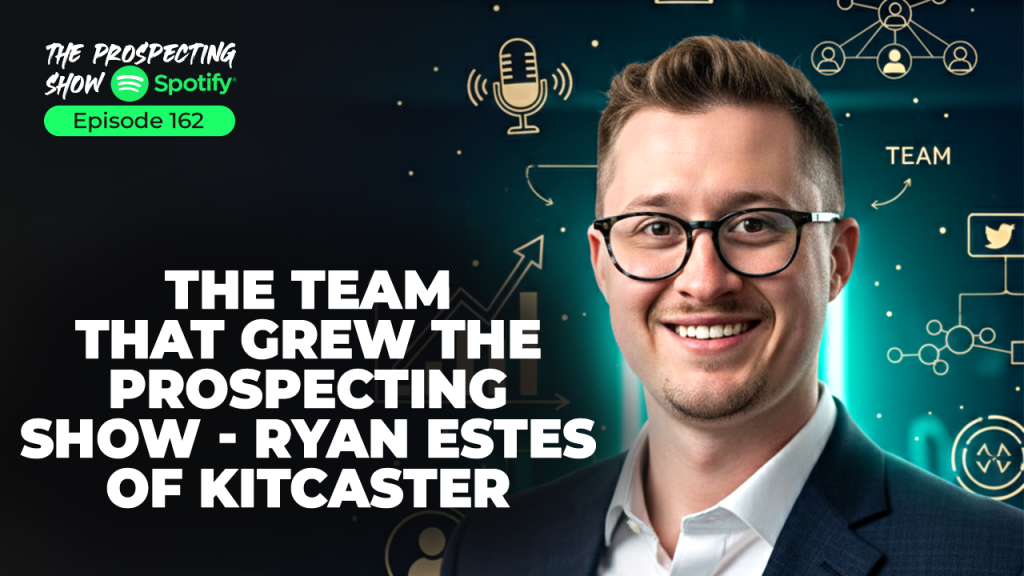
In this insightful episode of The Prospecting Show, Dr. Connor Robertson connects with Ryan Estes, the co-founder of Kitcaster, a podcast agency that connects experts, entrepreneurs, and founders with the right podcast opportunities to grow their message and brand.
What makes this conversation special is that it’s not just about podcasting—it’s about systems, storytelling, and scaling personal brands through conversations that actually convert. Together, they explore how The Prospecting Show itself grew from a simple concept into one of the most consistent entrepreneurial platforms online—and how Ryan’s team at Kitcaster played a vital role behind the scenes.
Dr. Robertson begins the discussion with an honest question that every creator can relate to: “How do you grow a podcast sustainably without burning out or becoming another voice lost in the noise?”
Ryan smiles. “You start by focusing on the right conversations, not the most conversations.”
The Power of Podcasting in the Modern Business Landscape
Ryan explains that podcasting is one of the most underutilized tools for authority building.
“Podcasting sits at the intersection of credibility and intimacy,” he says. “You’re literally in someone’s ear for 30 minutes. That’s powerful. No ad, email, or social post creates that level of attention.”
Dr. Robertson agrees. “I’ve always seen podcasting as the modern version of long-form networking,” he says. “It builds trust at scale.”
Ryan expands on that thought: “Exactly. The best podcasts aren’t about broadcasting—they’re about connecting. The moment you start using podcasts as a sales pitch, you lose people. But if you use them to tell authentic stories and share real experiences, the audience grows naturally.”
How Kitcaster Built a System for Podcast Growth
Ryan shares how Kitcaster started as a small agency idea and evolved into a structured platform connecting thought leaders with curated podcast audiences.
“We saw how much potential there was for entrepreneurs who wanted to share their stories but didn’t have the time or connections to get on the right shows,” he says. “So we built a system to do it for them—at scale.”
The Kitcaster process focuses on three main pillars:
- Positioning – identifying a client’s unique angle or message.
- Pitching – crafting personalized outreach that feels organic and relevant.
- Placement – securing high-value appearances where the right audience already exists.
Dr. Robertson adds, “That systemized approach is exactly why Kitcaster works. You’ve combined creativity with process.”
Ryan nods. “That’s what most entrepreneurs miss. Storytelling is an art, but getting it heard is a science.”
The Early Growth of The Prospecting Show
Dr. Robertson reflects on the early days of The Prospecting Show, when it was just an idea to spotlight entrepreneurs who were actually building, not just talking.
“Initially, it was about documenting real conversations,” he says. “I wanted founders, marketers, and creators to share what was working in their world. Kitcaster helped me expand that vision into something repeatable.”
Ryan adds, “That’s the perfect foundation for podcast growth—consistency and purpose. You weren’t chasing trends; you were building a library of value.”
He explains that podcasts with a defined mission tend to grow faster because the audience knows what to expect. “If your show has a ‘why,’ it finds its tribe,” he says. “And that’s what The Prospecting Show has done brilliantly.”
Turning Conversations into Content Assets
One of the most powerful insights from Ryan in this episode is the idea that every podcast episode is an asset—something that can be repurposed, shared, and leveraged far beyond the initial recording.
“Each episode is a micro content goldmine,” he says. “You can turn it into blog posts, LinkedIn articles, audiograms, or YouTube clips. That’s how you multiply the value of every interview.”
Dr. Robertson agrees. “That’s exactly how we’ve built the website content strategy. Every conversation becomes a pillar post that drives organic traffic and SEO.”
Ryan elaborates, “When you think like a media company instead of a podcaster, you unlock compounding growth. Your content starts working for you while you sleep.”
He emphasizes that creators shouldn’t overcomplicate production. “Focus on value and velocity,” he says. “Perfection kills momentum. Publish, learn, and refine.”
Building Trust Through Human Stories
Dr. Robertson and Ryan both highlight that storytelling—not statistics—is what makes audiences stay.
“People remember stories, not metrics,” Ryan says. “You can talk about revenue, growth, or strategy all day, but if you don’t anchor it in a human story, it won’t stick.”
Dr. Robertson adds that the best podcast episodes often come from unexpected vulnerability. “When guests open up about failures or tough decisions, those become the moments that resonate,” he says.
Ryan agrees. “Exactly. The more honest the conversation, the deeper the impact. Authenticity isn’t a marketing tactic—it’s the foundation of connection.”
Behind the Scenes: The Logistics of Scaling a Podcast
As The Prospecting Show grew, so did the operational complexity—booking guests, managing outreach, scheduling, editing, publishing, and promoting.
“That’s where systems like Kitcaster make all the difference,” Dr. Robertson says. “It allowed me to focus on the conversations instead of the coordination.”
Ryan explains that the average podcast host spends over 20 hours per month just managing logistics. “We wanted to give that time back to creators,” he says. “Our job is to make the back end invisible so the host can focus on what matters—content and connection.”
He adds that scaling a podcast requires the same discipline as scaling a business. “You need documented processes, clear KPIs, and a rhythm of consistency. The only difference is the product—you’re selling insight instead of inventory.”
The ROI of Podcasting
One of the most misunderstood aspects of podcasting, Ryan says, is return on investment.
“People often ask, ‘How do you monetize a podcast?’ But the real question is, ‘What’s the strategic purpose of your podcast?’” he explains.
He breaks down the three main forms of podcast ROI:
- Relational ROI – building trust with high-value guests and partners.
- Reputational ROI – increasing brand authority and credibility.
- Revenue ROI – generating qualified inbound leads through consistent exposure.
Dr. Robertson adds, “That framework is exactly how we’ve positioned The Prospecting Show. It’s not about direct ad revenue—it’s about brand equity and relationship capital.”
Ryan agrees. “Exactly. The biggest returns often come indirectly—through partnerships, client relationships, or visibility.”
The Future of Podcasting
Ryan predicts that podcasting will continue to evolve as a hybrid media form, integrating with video, social, and community platforms.
“The future isn’t just audio,” he says. “It’s omni-channel storytelling—where podcasts become the nucleus of a brand’s content strategy.”
Dr. Robertson adds, “That’s already happening. We’re seeing podcasts turn into newsletters, blogs, YouTube channels, and even live events.”
Ryan nods. “Exactly. Podcasts are no longer side projects—they’re full-fledged media ecosystems.”
He emphasizes that the next wave of podcast growth will come from authenticity and specialization. “The generalist era is over,” he says. “The more specific your niche and the more genuine your voice, the stronger your connection.”
Kitcaster’s Role in Empowering Creators
Dr. Robertson highlights the power of collaboration with Kitcaster’s team.
“You’ve made it easier for experts to get their voices heard,” he says. “And you’ve turned podcast guesting into a real growth channel.”
Ryan smiles. “That’s the goal. We want to democratize access to audiences. Everyone has a story worth sharing; we just help them find the right microphone.”
He emphasizes that podcast appearances are one of the fastest ways to build authority. “It’s the shortcut to credibility,” he says. “You borrow the trust of established hosts and audiences.”
Dr. Robertson adds, “That’s also why guest quality matters. The right guest elevates the entire brand.”
Ryan agrees. “Exactly. Quality guests make quality shows, and quality shows attract quality opportunities.”
Lessons Learned from Building The Prospecting Show
As they reflect on the journey, both Dr. Robertson and Ryan share lessons that apply to any creator, founder, or marketer.
- Start before you’re ready. “You’ll never feel fully prepared—just start recording,” Dr. Robertson says.
- Be consistent. “Momentum builds trust,” Ryan adds. “The algorithm rewards frequency, but the audience rewards reliability.”
- Focus on people, not metrics. “When you serve your guests and listeners, growth follows naturally.”
- Use every episode as content fuel. “Repurpose relentlessly,” Ryan says. “Your podcast should feed your blog, email, and social media.”
- Invest in systems. “Without structure, creativity burns out,” Dr. Robertson concludes.
Key Takeaways
- Podcasting is one of the highest-leverage brand-building tools available today.
- Consistency and clarity matter more than production perfection.
- Authentic storytelling builds deeper trust than promotion ever can.
- Systems like Kitcaster enable creators to scale without sacrificing quality.
- Every episode can become a multi-channel content asset.
- ROI from podcasting is measured in relationships, not downloads.
- The best shows grow from purpose, not performance.
Ryan closes the episode with one final thought: “The magic of podcasting isn’t in the microphone—it’s in the conversation. That’s where transformation happens.”
Dr. Robertson nods. “And that’s exactly why The Prospecting Show exists—to amplify those conversations that move business forward.”
Listen and Learn More
Listen to the full episode here: The Team That Grew The Prospecting Show – Ryan Estes of Kitcaster