Episode 135-How to Grow Your Specialty Business with Liz Whitehead
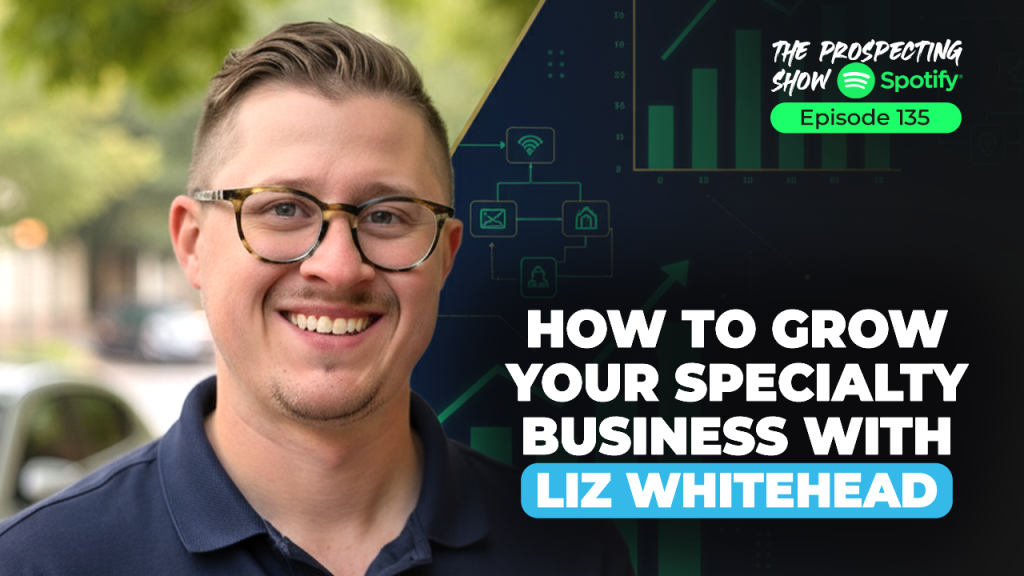
In this episode of The Prospecting Show, Dr Connor Robertson sits down with Liz Whitehead, the CEO of 12PointFive, to talk about how small and specialty businesses can grow faster through strategic relationships, certification programs, and intentional business development. Liz is known for her work helping diverse and women-owned companies connect with corporate procurement opportunities and build sustainable growth.
Turning Certification into Strategy
Dr Robertson opens the conversation by addressing a key challenge for many entrepreneurs. “A lot of business owners get certified as minority-, veteran-, or women-owned, but then don’t know what to do next.”
Liz agrees. “Exactly. Certification is a tool, not a trophy. Too many businesses treat it like a checkbox instead of a strategic growth driver.”
She explains that the WBENC, NMSDC, and other supplier diversity certifications open doors — but relationships keep them open. “You have to build genuine partnerships with corporate buyers, not just pitch them once and move on.”
Dr Robertson adds, “That’s the same principle across all industries — proximity builds opportunity.”
How Specialty Businesses Compete
Liz emphasizes that specialty businesses succeed when they differentiate through focus. “You can’t compete on everything — you have to know your lane and dominate it,” she says.
She explains that corporations are actively looking for specialized partners who can deliver unique value. “If you’re small, that’s not a weakness. It means you’re agile and innovative.”
Dr Robertson agrees. “That’s a strength in private markets too. Speed, not size, wins contracts.”
The Power of Relationship Capital
Liz points out that the biggest predictor of success for certified businesses is relationship capital. “Networking isn’t about collecting contacts — it’s about building community. The people who grow fastest are the ones who show up, follow up, and help others win.”
She shares how entrepreneurs can move from introductions to impact:
- Engage Consistently: Attend events, panels, and matchmaking sessions.
- Be of Service: Share connections, insights, and introductions.
- Follow Through: Reliability turns visibility into trust.
Dr Robertson adds, “That’s the same formula for scaling any company — show up, serve, and stay consistent.”
Breaking into Corporate Supply Chains
Liz explains that most corporations are open to working with certified suppliers but need proof of reliability. “They want to see capacity, systems, and financial stability,” she says. “You can’t just have passion — you need process.”
She recommends that business owners start with smaller contracts to build a track record. “Prove you can deliver, document everything, and then scale your proposals.”
Dr Robertson notes, “That’s the same way private equity evaluates operators — proof of performance precedes capital.”
Collaboration Over Competition
Liz shares that certified business communities are most powerful when members collaborate. “Stop thinking of other businesses as competitors. Partner with them to deliver joint solutions. That’s how you win larger contracts.”
She gives an example of two certified firms combining services to meet a Fortune 500 client’s broader needs. “Neither could win alone, but together they became the perfect fit.”
Dr Robertson adds, “That’s the mindset shift — collaboration compounds credibility.”
The Role of Mentorship and Coaching
Liz emphasizes mentorship as a growth multiplier. “Every successful entrepreneur I know had mentors who helped them navigate complex opportunities.”
She encourages entrepreneurs to both seek guidance and give it. “Mentorship builds your visibility and authority. Teaching others proves your expertise.”
Dr Robertson agrees. “That’s how leadership scales — by sharing knowledge, not hoarding it.”
Building Brand Authority in Niche Markets
Liz discusses how specialty businesses can stand out through thought leadership. “Share your expertise publicly — write, speak, and post about what you know. Visibility leads to opportunity.”
She adds that authenticity matters more than polish. “Buyers want to see the person behind the business. When your values align with theirs, you build trust.”
Dr Robertson adds, “That’s true in every market. People buy confidence and clarity more than credentials.”
Overcoming Imposter Syndrome
Many small business owners doubt they belong at the corporate table. Liz addresses this directly. “You do belong. The key is preparation. When you know your numbers, your capabilities, and your differentiators, you walk into meetings with authority.”
She continues, “Confidence comes from clarity. That’s why training and mentorship matter — they give you the structure to support your self-belief.”
Dr Robertson says, “That’s powerful. In private equity, the same thing happens — founders lose deals not because they’re unqualified, but because they don’t project confidence in their systems.”
The Future of Supplier Diversity
Liz predicts that supplier diversity will continue evolving from compliance to strategy. “Corporations are realizing that diverse suppliers drive innovation and agility. This isn’t philanthropy — it’s smart business.”
She adds, “The future belongs to companies that understand partnership economics — how collaboration drives growth for both sides.”
Dr Robertson concludes, “That’s the perfect parallel to modern entrepreneurship — inclusion as a growth engine, not a checkbox.”
Key Takeaways
- Certification is a starting point, not a finish line.
- Build genuine relationships that create long-term opportunity.
- Focus your niche and dominate it through clarity and consistency.
- Collaborate to scale — partnerships expand capacity and credibility.
- Confidence and preparation are your most valuable assets.
Dr Robertson wraps up by saying, “Liz Whitehead proves that growth comes from connection. When specialty businesses combine expertise with authenticity, they don’t just win contracts—they build legacy.”
Liz smiles and adds, “Exactly. The future is collaborative, strategic, and diverse.”
Listen to the Full Episode:
How to Grow Your Specialty Business with Liz Whitehead