Episode 169-Finding Your Perfect Franchise with Rich LeBrun
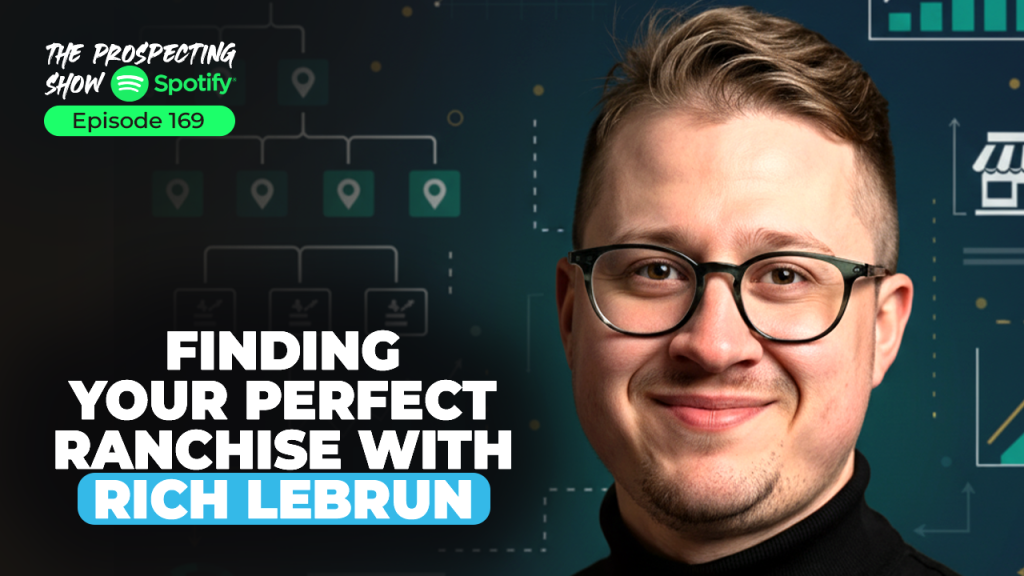
In this episode of The Prospecting Show, Dr Connor Robertson sits down with Rich LeBrun, founder of the RLB Franchise Consulting Group. The conversation covers what it takes to find a franchise that fits your skills, values, and long-term goals — and how first-time business owners can use franchising as a structured entry point into entrepreneurship.
Why Franchising Remains a Powerful Path
Dr Robertson opens with a simple observation: “Franchising sits between owning a business and joining a proven team. It gives you systems without stripping away freedom.”
Rich LeBrun agrees. “Franchising lets people step into ownership with a playbook. It’s not a guarantee, but it removes a lot of the guesswork.”
He explains that most franchises succeed because they combine tested operations, marketing support, and brand recognition. “Instead of inventing everything, you’re executing something that’s already worked hundreds of times.”
Matching Personality to Brand
LeBrun emphasizes that self-awareness comes before brand selection. “The best franchise isn’t the hottest one — it’s the one that matches who you are.”
He uses three questions with every client:
- What kind of work energizes you?
- How do you define freedom — time, money, or control?
- How comfortable are you with following a system?
Dr Robertson adds, “Those same questions drive any acquisition decision. Alignment beats excitement.”
Once values are clear, LeBrun filters options by industry, investment level, and lifestyle impact. “A semi-absentee gym franchise and a full-time senior-care franchise require totally different temperaments,” he says.
The Financial Framework
Financing is often the first roadblock. Rich breaks it down into three routes:
- SBA Loans: Lower down payments, long repayment terms.
- Retirement Rollovers (ROBS): Using 401(k) funds without penalties.
- Partnership Models: Combining capital with operational expertise.
“People think they need a million dollars to start,” he says. “In reality, most solid franchises require $150K–$250K total, and SBA financing covers up to 80 percent.”
Dr Robertson notes that this resembles structured business acquisitions: “You’re leveraging a proven system — just financed differently.”
Due Diligence and Data
Before signing, LeBrun advises clients to follow a “three-lens due diligence process”:
- Lens 1 – Performance: Review the Franchise Disclosure Document (FDD), average revenues, and margins.
- Lens 2 – Support: Evaluate training, marketing, and technology.
- Lens 3 – Culture: Talk to franchisees about daily life, not just profits.
“The best indicator of your future is how the current owners feel today,” he says.
Dr Robertson adds, “Culture and support drive sustainability — that’s what keeps franchisees thriving after the honeymoon phase.”
Systems Create Freedom
LeBrun calls franchising “freedom through discipline.” Each process — marketing scripts, hiring guides, vendor lists — exists to protect consistency.
“Entrepreneurs think systems restrict them,” he says. “In truth, systems give them breathing room.”
Dr Robertson agrees. “When you operate within proven guardrails, you spend less time guessing and more time growing.”
Scaling Within the Network
Many successful franchisees don’t stop at one location. They expand regionally or acquire multiple concepts.
Rich outlines a growth ladder:
- Master one location.
- Document operations.
- Hire a manager.
- Replicate.
“Franchising rewards operators who become owners,” he says. “Once your first store runs without you, your income multiplies.”
Dr Robertson connects this to his acquisition philosophy. “Systemized businesses — including franchises — attract capital because they’re predictable.”
Avoiding Common Mistakes
LeBrun warns against three pitfalls:
- Emotional Buying: “Falling for a brand without studying the numbers.”
- Ignoring Territory Rights: “Overlapping markets can kill margins.”
- Underestimating Ramp Time: “Even the best system needs six to twelve months of grind before stability.”
Dr Robertson summarizes it neatly: “Process first, patience second, profit third.”
Franchising vs Start-Ups
The discussion turns to the difference between launching from scratch and joining a franchise.
“Start-ups build systems,” Rich says. “Franchises buy them.”
He explains that for professionals leaving corporate life, franchising offers structure without chaos. “You already know how to follow processes — now you get to lead one.”
Dr Robertson adds, “It’s entrepreneurship with training wheels, but the wheels are made of steel.”
Long-Term Value and Exit Strategy
Franchises, like other small businesses, can be sold. Rich encourages owners to think about resale from day one.
“Build clean books, strong staff, and customer reviews,” he says. “A well-run franchise trades at a premium multiple because buyers trust the system.”
Dr Robertson relates this to acquisitions again: “Predictability creates enterprise value. That’s why institutional investors buy franchise portfolios.”
Technology and Automation
Modern franchising leverages tech for consistency — POS systems, CRM dashboards, digital marketing portals.
“Automation gives small owners enterprise-level insight,” LeBrun notes. “You can track KPIs daily, not quarterly.”
Dr Robertson adds, “Technology levels the playing field. A single-unit franchise can now operate with the sophistication of a national chain.”
The Human Element
Despite systems and software, success still depends on people. “Leadership, empathy, and accountability never go out of style,” Rich says.
He tells a story of a top-performing franchisee who credited success to culture: “We celebrate wins and address issues immediately. That’s our real system.”
Dr Robertson smiles. “That’s why I say business is human first, operational second.”
The Future of Franchising
LeBrun sees major growth in service industries — home care, fitness, education, and sustainability. “Consumers want convenience and purpose. Franchises that deliver both will dominate the next decade.”
He also highlights a new demographic of owners: professionals in their 30s and 40s leaving corporate life for control and balance. “They’re skilled, capital-ready, and tired of bureaucracy.”
Dr Robertson agrees. “That’s the new wave — career entrepreneurs who want legacy and lifestyle, not just income.”
Key Takeaways
- The best franchise fits your values, skills, and goals.
- Treat franchising like any major investment — do real due diligence.
- Systems create the freedom to scale.
- Avoid emotional decisions; analyze data and culture.
- Build for resale from day one.
- Technology amplifies efficiency, but people drive results.
Rich LeBrun closes with a challenge: “Don’t chase trends. Chase alignment. When your business matches your identity, success follows naturally.”
Dr Robertson nods. “That’s the ultimate lesson — growth with purpose always lasts longer than growth with hype.”
Listen and Learn More
Listen to the full episode here: Finding Your Perfect Franchise with Rich LeBrun