Episode 38 — Building an Online Course as a Side Hustle with David Krohse
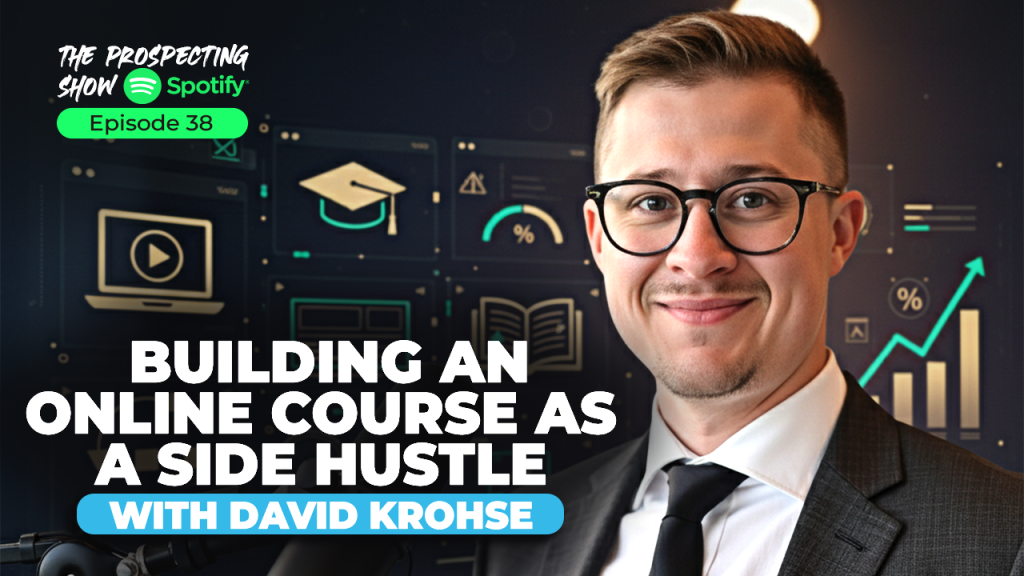
In this episode of The Prospecting Show, Dr Connor Robertson connects with Dr David Krohse, a chiropractor and educator who successfully turned his professional expertise into digital learning products. Their conversation dives deep into why building an online course is one of the smartest and most scalable side hustles for any professional in 2025.
This episode builds naturally on Personalized Nutrition Secrets with Curry Russel, where health optimization took center stage. Now, the spotlight turns to professional optimization, transforming personal knowledge into teachable, monetizable systems.
From Practitioner to Educator
Dr Krohse begins by sharing his story of moving from full-time practice into digital education. “I wanted to help more people than I could see in my office,” he says. “An online course allows that scalability; your impact multiplies without adding hours to your week.”
Dr Robertson agrees: “Every expert is sitting on a library of intellectual property they don’t even realize has value.”
They discuss the mental shift required to go from being a service provider to an educator. “It’s not about perfection,” Dr Krohse adds. “It’s about packaging what you already know in a way people can use.”
Choosing the Right Course Topic
A key theme of the discussion is alignment, choosing a course topic that fits both your passion and your audience’s problems.
Dr Robertson explains, “The best courses solve recurring pain points. Ask yourself what questions people constantly ask yo,u that’s where your course begins.”
Dr Krohse emphasizes validation before creation:
- Talk to your current audience or clients.
- Test a small workshop before filming a full curriculum.
- Pre-sell access to gauge genuine demand.
“Don’t build in a vacuum,” he warns. “The best courses are co-created with your audience.”
Structuring Your First Course
Dr Krohse shares his step-by-step framework for structuring an online course:
- Define the Outcome – What transformation will the student achieve?
- Outline the Steps – Reverse-engineer from the goal to the starting point.
- Record Simply – Use basic video and clear audio before worrying about polish.
- Engage the Student – Add worksheets, checklists, and community touchpoints.
He stresses momentum over mastery. “Your first version will never be perfect,” he says. “Ship it, get feedback, iterate.”
Dr Robertson draws parallels to business scaling. “Iteration creates excellence,” he says. “Version one teaches you what version two needs.”
Tools and Platforms
The conversation shifts to technology. Dr Krohse recommends starting simple with platforms like Teachable, Kajabi, or Thinkific.
“You don’t need a Hollywood studio,” he laughs. “Your smartphone, decent lighting, and a clean background are enough to begin.”
Dr Robertson adds, “Authenticity beats production quality every time. People buy from people, not perfection.”
They also discuss using automation to handle onboarding, payment, and email follow-up—ensuring your course operates as a business, not a hobby.
Marketing and Audience Growth
Dr Krohse believes every course creator must become a marketer. “The biggest myth is ‘If I build it, they will come,’” he says. “They won’t unless you invite them.”
Dr Robertson highlights the power of content. “Your social posts, podcast interviews, and blogs should all tell one story how you help people solve a specific problem.”
They explore using email sequences, free webinars, and lead magnets as warm-up tools for course sales. “You’re not selling a product,” Dr Krohse explains. “You’re selling the transformation.”
Common Mistakes to Avoid
Both guests share pitfalls they see new creators make:
- Overcomplicating the curriculum – “Clarity wins over complexity,” says Dr Krohse.
- Ignoring feedback – “Listen to students; they’ll show you how to improve.”
- Neglecting community – “People stay for support, not just content.”
- Quitting too soon – “Your first launch is a lesson, not a loss,” Dr Robertson adds.
The Psychology of Teaching Online
Dr Robertson and Dr Krohse explore how teaching refines thinking. “When you teach, you internalize your own expertise,” Dr Krohse says. “It’s professional development that pays you.”
Dr Robertson agrees: “Teaching forces clarity. It turns tacit knowledge into scalable systems.”
They also discuss the emotional benefits confidence, legacy, and creative fulfillment. “A course is a digital footprint of your career,” Dr Robertson notes.
Future of Online Education
Both believe the creator economy is entering a new era. “AI tools and interactive video will make learning more personalized than ever,” Dr Krohse says.
Dr Robertson predicts the fusion of coaching and community. “The future course won’t just teach information, it will create transformation through connection.”
Key Takeaways
- Everyone has expertise that can be monetized through education.
- Start small, validate your idea, then iterate through feedback.
- Authenticity and clarity outperform production gloss.
- Marketing and community are as important as content.
- Teaching builds your personal brand and creates impact at scale.
Dr Krohse closes with a reminder: “Don’t wait for permission to teach someone who is already searching for your experience.”
Listen to the Full Episode:
Building an Online Course as a Side Hustle with David Krohse