Episode 7 — Digital Marketing for Professionals with Kemmet Dominguez
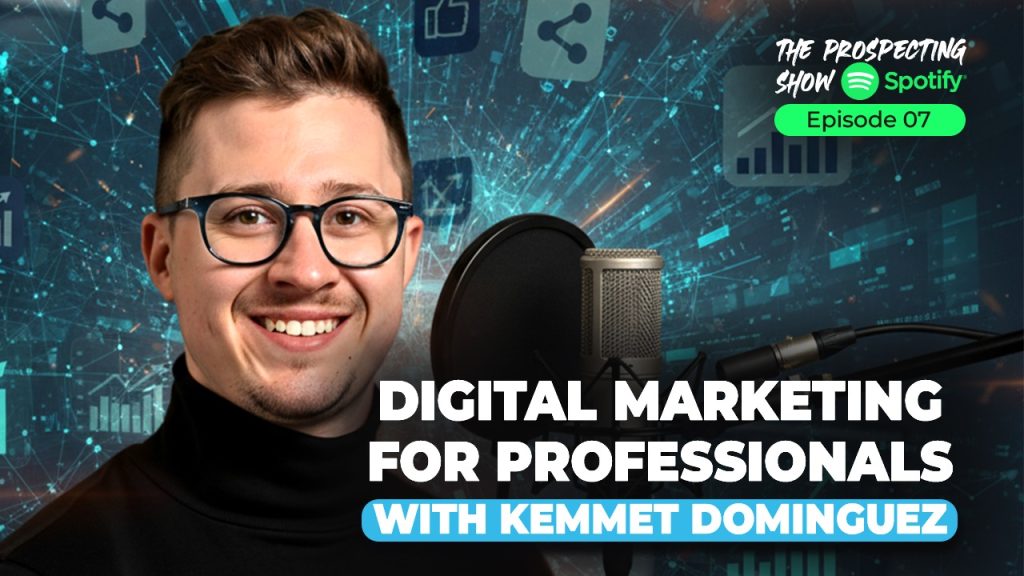
In this episode of The Prospecting Show, Dr Connor Robertson sits down with digital marketing expert Kemmet Dominguez to unpack what it really takes for professionals, doctors, attorneys, consultants, and small business owners to thrive in today’s fast-changing online world.
As businesses shift from traditional word-of-mouth to digital reputation systems, the difference between struggling and scaling often comes down to visibility and consistency. In this conversation, Dr Robertson and Kemmet break down the strategies that separate industry leaders from those still trying to catch up.
The Changing Landscape of Professional Marketing
Kemmet begins by noting that most professionals were never trained in marketing. “If you’re a doctor, lawyer, or engineer, your education taught you expertise not exposure. But today, expertise without visibility is invisible.”
Dr Robertson agrees, adding that marketing has become a credibility layer. “You can be the best in your field, but if you don’t show up online where your clients live, they’ll never find you.”
Together, they explore how digital marketing has transformed from an optional skill into a fundamental requirement for professional survival.
The Core of Digital Trust
Dominguez emphasizes that digital marketing for professionals isn’t about gimmicks it’s about trust. “You’re not selling a product. You’re selling peace of mind, results, and expertise. Every ad, post, and email needs to reinforce credibility.”
He explains that trust in digital marketing comes from three pillars: authority, authenticity, and accessibility.
- Authority is what you know.
- Authenticity is how you communicate it.
- Accessibility is how easy it is for people to reach and engage with you.
Dr Robertson points out that trust can’t be automated. “Technology can scale your reach, but it can’t fake integrity. The goal is to blend automation with authenticity.”
Understanding the Digital Buyer’s Journey
Dominguez shares that every professional’s ideal client goes through the same digital journey: awareness, evaluation, and engagement.
- During awareness, prospects first discover you through Google, social media, or referrals.
- In evaluation, they validate whether you’re credible by checking your reviews, website, and online content.
- Engagement happens when they finally reach out or buy.
“The mistake many professionals make,” Kemmet says, “is starting at the end. They try to sell before they’ve educated or built trust.”
Dr Robertson echoes that insight: “Education-based marketing wins. If people learn from you, they remember you.”
Building a Personal Brand That Converts
When discussing personal branding, Kemmet emphasizes clarity. “Professionals need a story that connects expertise to impact. Clients aren’t buying your title they’re buying transformation.”
He continues, “Your brand should answer three questions: Who are you? What do you solve? And why should someone trust you?”
Dr Robertson elaborates, “Consistency builds brand equity. You can’t post once a month and expect recognition. You have to show up daily in some form written, visual, or video.”
Website Optimization for Professional Services
The conversation turns to websites often the first real impression a client has.
Dominguez advises: “Your website is your digital office. It should look professional, load fast, and answer the top questions clients have. Clarity beats cleverness.”
Dr Robertson adds, “Every page should guide a visitor toward one simple action—book, call, or learn more. The fewer choices you give, the higher your conversions.”
They both emphasize the importance of SEO for long-term discoverability. “If you’re not ranking for your name, someone else’s content is,” Kemmet warns.
The Power of Social Media for Authority
For professionals wary of social media, Kemmet offers a perspective shift: “You’re not posting for likes—you’re posting for leadership.”
He outlines a simple rule: educate, engage, elevate.
- Educate: Teach something valuable every week.
- Engage: Start conversations, not monologues.
- Elevate: Highlight results, testimonials, or lessons learned.
Dr Robertson shares that social proof accelerates growth. “When clients share their experience publicly, that’s your best marketing asset. Word-of-mouth has gone digital.”
Paid Advertising and ROI
Dr Robertson asks, “When should a professional start running paid ads?”
Kemmet responds, “Only after your foundation is solid. Ads amplify what’s already working. If your messaging, website, or follow-up systems are weak, ads just burn money.”
He suggests that before spending on ads, professionals should:
- Optimize their organic presence.
- Build email or retargeting systems.
- Test their offers through smaller campaigns.
Dr Robertson adds, “Data without direction is dangerous. Every campaign needs a clear outcome—awareness, leads, or conversions.”
Content Marketing for Professionals
Kemmet discusses how educational content builds authority faster than any other method. “Blogs, podcasts, and videos help prospects see your expertise before they meet you. When you teach, you earn trust before the sale.”
Dr Robertson notes that long-form content compounds over time. “Every article or video is a digital asset. While ads disappear when the budget stops, content keeps working for you.”
They both stress the importance of consistency and repurposing turning one big idea into multiple micro pieces for different platforms.
The Role of Automation
Dominguez shares his thoughts on marketing automation: “Automation should serve the client, not replace the relationship. Use tools to stay consistent, follow up faster, and personalize communication—but never let automation sound robotic.”
He explains that the best automation still feels human. “When a system delivers the right message at the right time, it feels personal even though it’s automated.”
Dr Robertson adds, “It’s not about removing people it’s about removing friction.”
Email Marketing and Retention
When the discussion shifts to email marketing, Kemmet dispels a myth: “Email isn’t dead it’s the most profitable digital channel when done right.”
He outlines how professionals should use email to educate, not just sell. “Send weekly insights, share case studies, or offer quick wins. Over time, your audience learns to associate your name with value.”
Dr Robertson reinforces the idea: “In a world of constant noise, an inbox relationship is intimate. It’s where professionals can build trust at scale.”
The Ethics of Digital Marketing
Kemmet emphasizes that professionals must uphold ethics in marketing. “Honesty isn’t optional it’s strategic. Misleading claims might get clicks, but they destroy reputations.”
Dr Robertson agrees, adding, “Professional marketing should elevate an industry, not exploit it. The goal is to inform, not manipulate.”
Future Trends in Professional Marketing
Looking ahead, Dominguez predicts that personalization will drive the next era of professional marketing. “AI will help tailor messages to individual preferences, but the professionals who win will be the ones who still sound human.”
Dr Robertson concludes, “Technology changes but principles don’t. The best marketing is empathy, clarity, and consistency.”
Key Takeaways
- Digital trust is built on authority, authenticity, and accessibility.
- Education-based marketing outperforms hard selling.
- Consistency across all platforms creates brand credibility.
- Email and content remain the most powerful long-term strategies.
- Automation should amplify empathy, not replace it.
Dominguez summarizes perfectly: “Professionals who market with integrity and intelligence will dominate their industries.”
Dr Robertson closes the episode by encouraging listeners to implement small changes. “Start where you are, with what you have. The most important thing is to show up authentically and consistently.”
Listen to the Full Episode:
Digital Marketing for Professionals with Kemmet Dominguez