Episode 87 — Email Marketing Isn’t Dead, You’re Just Doing It Wrong with Ron Story
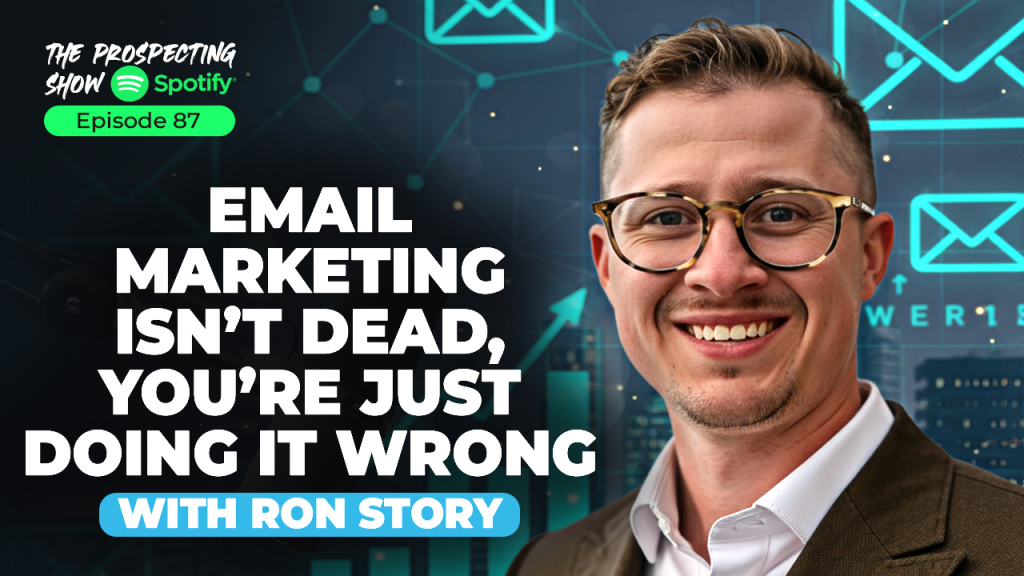
For years, self-proclaimed “marketing futurists” have declared that email is obsolete that social media, chatbots, and AI would replace it. Yet, email remains one of the most powerful and profitable communication channels in business. In this episode of The Prospecting Show, Dr. Connor Robertson sits down with Ron Story, a veteran marketer and founder of PitchDB, to uncover the truth: email marketing isn’t dead you’re just doing it wrong.
Ron’s perspective comes from experience. He’s helped companies across industries generate millions in revenue through targeted email campaigns that blend psychology, relevance, and timing. “Email is about relationships, not promotions,” Ron says. “It’s about showing up consistently with something people actually care about.”
Dr. Robertson opens by asking why so many businesses fail at email marketing. Ron smiles knowingly. “Because they treat it like an ad, not a conversation,” he says. “If your emails sound like you’re shouting, people will hit delete before they even scroll.”
That distinction conversation over campaign echoes Kate DiLeo’s Why You Need to Get Your Brand Dialed In ASAP (listen here), where Kate emphasized that brands win when they communicate clearly, not loudly. Ron takes that same idea into the inbox, replacing complexity with connection.
He explains that the inbox is personal territory. “It’s where people talk to friends, colleagues, and family. If you show up as a salesman instead of a trusted guide, you’re invading, not engaging.”
To fix that, Ron teaches what he calls The Three Pillars of Effective Email Marketing:
- Relevance – “Write for one person, not everyone.”
- Value – “Teach before you sell.”
- Timing – “Send when your audience is thinking about the problem you solve.”
Dr. Robertson connects these principles to Jason Cutter’s Why You Can’t Scale Your Team Sales (listen here), where Jason argued that human connection not automation scales sales. Ron agrees, adding, “Automation should make you more human, not less.”
He continues, “The best automation feels personal. You can have 10,000 subscribers and still make each person feel like you wrote just for them.”
Ron recalls how, early in his career, he made the same mistakes he now helps others avoid. “I used to blast newsletters full of product links,” he says. “It got clicks but no conversions. Once I started telling stories and solving problems, everything changed.”
That storytelling approach mirrors Scott Aaron’s Growing a Brand Online (listen here), where authenticity and relatability built online trust. Ron’s method applies those same lessons through the inbox, where connection directly drives revenue.
Dr. Robertson asks Ron what separates good emails from great ones. “Clarity and cadence,” Ron answers. “If your message confuses people or shows up inconsistently, they’ll forget you. But if you show up with purpose every week, you’ll earn their attention.”
That consistency ties directly into Mark Herre’s Why You Need SEO in Your Biz Right Now (listen here), where long-term visibility is rewarded for consistent action. Just as Google trusts those who publish regularly, audiences trust those who email reliably.
Ron reveals the most overlooked element of email success: segmentation. “Everyone talks about automation, but few talk about audience segmentation,” he says. “You can’t send the same message to a new lead and a ten-year customer. Context changes everything.”
He breaks it down with an example: “If someone just downloaded your free guide, don’t pitch them immediately. Nurture them. If they’ve bought three times, show appreciation. Email is about meeting people where they are in their journey.”
Dr. Robertson notes that this approach parallels David Rouen’s Growing a Supply Chain in Healthcare (listen here), where timing and tailored systems determined success. Both men understand that precision and empathy drive outcomes.
Ron also debunks a common myth: that open rates are the ultimate metric. “Open rates don’t pay the bills,” he says. “Conversations and conversions do. I’d rather have 500 engaged readers than 50,000 zombies.”
This grounded realism mirrors Faris Ghani’s Entrepreneurial Highlight (listen here), where intentional, high-quality relationships outperformed sheer numbers.
Ron introduces his framework for writing impactful emails:
- Hook – Start with a story, question, or bold statement.
- Relate – Show empathy for your reader’s situation.
- Educate – Offer one clear, actionable insight.
- Invite – End with a call to action that feels like an opportunity, not a demand.
“Every email should feel like a personal letter from someone who understands your pain and has the tools to help,” he says.
Dr. Robertson points out how this structure mirrors Jason Stapleton’s Nomadic Wealth Formula (listen here), where Jason turned value into trust, and trust into income. Both emphasize giving before asking, an approach that outlasts every marketing trend.
Ron shares real-world examples of campaigns that worked. “One client stopped sending promotions and started sending weekly ‘insight emails’, short stories with lessons. Their open rate went up 70%, and revenue followed,” he says. “People don’t hate emails; they hate irrelevant ones.”
He calls this the Inbox Relationship Rule: “If your audience looks forward to your emails, you’ll never need to chase leads again.”
Dr. Robertson asks Ron how small businesses can build better email systems without expensive tools. “Start simple,” Ron says. “You don’t need AI or enterprise automation. You need a spreadsheet, a story, and consistency.”
He explains that even basic email platforms can yield huge returns when used thoughtfully. “It’s not about technology, it’s about empathy. The better you understand your reader, the better your results.”
That people-first approach reflects Crew Me Up’s Building a Team on the Spot (listen here), where collaboration and responsiveness built success. Ron applies those same team principles to the digital audience listening, adapting, and serving.
Dr. Robertson asks for Ron’s advice on frequency. “It’s not about sending more, it’s about sending better,” Ron explains. “Weekly works for most businesses. The key is to be predictable without being robotic.”
He warns against the “blast and hope” mindset. “You wouldn’t walk into a networking event and hand everyone the same brochure. So don’t do that in someone’s inbox.”
Ron concludes with Five Golden Rules of Modern Email Marketing:
- Write like you talk. If it wouldn’t work in conversation, don’t send it.
- Teach before you pitch. Value earns attention.
- Segment relentlessly. Speak to where the person is, not who they were.
- Automate with empathy. Let data enhance your humanity, not replace it.
- Stay consistent. Inboxes reward reliability.
Dr. Robertson summarizes the episode: “Ron Story proves that email marketing isn’t dead, it’s just misunderstood. When done right, it’s the most personal, profitable, and scalable marketing channel in existence.”
For listeners who want to explore related episodes, check out Mark Herre’s Why You Need SEO in Your Biz Right Now, Kate DiLeo’s Why You Need to Get Your Brand Dialed In ASAP, and Jason Cutter’s Why You Can’t Scale Your Team Sales all available at drconnorrobertson.com.
Dr. Robertson closes with a reflection that captures Ron’s wisdom perfectly: “The inbox is the last sacred space in marketing. Treat it with respect, lead with value, and you’ll turn strangers into lifelong fans one email at a time.”