Episode 53 — Innovation for a Cleaner World with Arron Werner | The Prospecting Show with Dr Connor Robertson
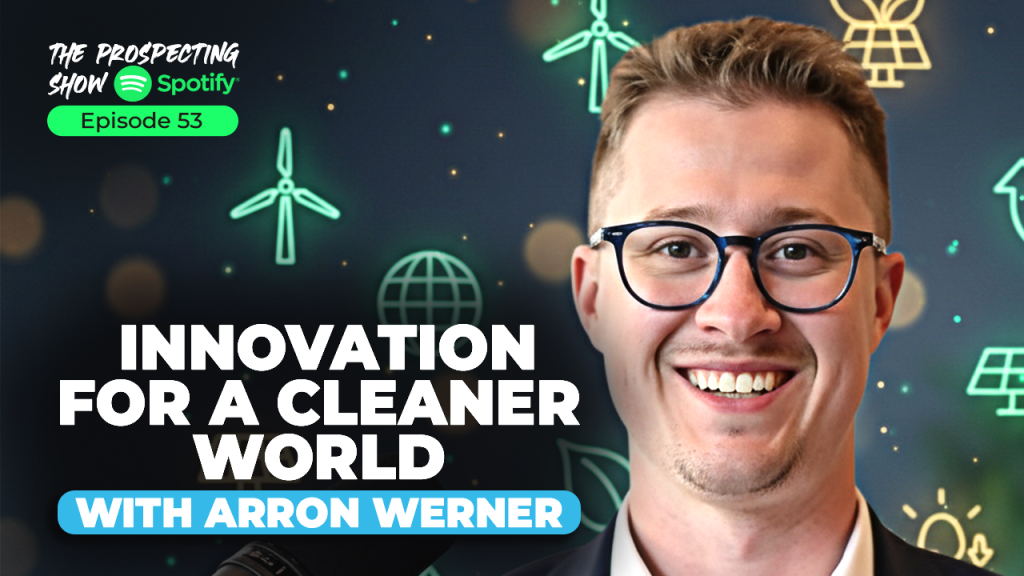
Guest Spotlight
Arron Werner — Founder of [CleanTech Innovations] (placeholder name)
Arron is an entrepreneur in the sanitation and environmental tech space, focused on transforming disposable waste systems via novel cleaning techniques. In this episode, he discusses his journey, the market gaps he’s targeting, and how innovation and sustainability can scale together.
Innovation often starts with a problem no one wants to talk about: waste, decay, neglect.
Enter Arron Werner, founder of a sanitation-focused startup that’s rethinking how we clean, preserve, and manage disposable infrastructure. In Episode 53 — Innovation for a Cleaner World with Arron Werner, Dr Connor Robertson leads a conversation on how to build a business that serves the environment, economy, and humanity in harmony.
The Problem That Drives Innovation
Arron opens by describing the problem space: sanitation infrastructure often fails under cost constraints, environmental stress, and neglect. “We design systems to be replaced, not maintained.” He argues that a small shift in how we clean and preserve assets (trash cans, public bins, city fixtures) can yield tremendous savings and environmental benefits.
He traces back his inspiration to a city he once lived in, where overflowing trash bins monthly prompted him to think: what if the containers cleaned themselves, or at least resisted wear so that replacement frequency drops dramatically?
From Idea to Prototype
Dr Connor and Arron explore the early days: validating the idea, creating proof-of-concept models, and working through the physics and chemistry of cleaning agents and surface treatments. Arron shares obstacles: sourcing materials, regulatory hurdles, and the skepticism of potential customers who assumed “waste tools don’t need innovation.”
They talk about how feedback from municipal partners, waste management firms, and urban planners shaped the design. Less glamorous features like durability, ease of maintenance, and retrofit compatibility often took precedence over flashy ones.
Business Strategy & Go-to-Market
Arron lays out the strategy for scaling in a tough space: start small with pilot cities, prove ROI, partner with waste vendors, and build brand trust in a conservative market. He mentions needing to balance R&D costs with near-term revenue, avoiding overcommitment before validation.
Dr Connor presses on margins, scalability, and resilience to market downturns. They discuss how to price deep maintenance solutions while competing with cheap replacements, and how to build customer relationships that go beyond sales, ongoing service, warranties, and trust to become differentiators.
Leadership Lessons from Clean Tech
Throughout the interview, Arron weaves in leadership lessons:
- Stay humble; sanitation is low-glamour, so you must love the work.
- Don’t chase hype, chase durability.
- Be service-oriented, even when your product is “just” cleaning.
- Surround yourself with multidisciplinary thinkers (chemists, engineers, city planners).
Dr Connor and Arron reflect on parallels to Episode 46 — The Service Equation, where giving value was central to growth. Arron’s product literally gives sustainability and cleanliness.
Challenges & Resilience
They tackle inevitable setbacks: supply chain delays, regulatory uncertainty, market resistance, and managing cash runs. Arron emphasizes the importance of patience, transparency with investors, and pivoting when feedback is consistent.
This echoes Episode 51 — Leading in Uncertainty, where confidence under ambiguity was key. Arron admits there were times he didn’t know the next step, but he leaned on principles, team, and curiosity.
Vision & Impact
Toward the end, they broaden the conversation: Arron’s vision is not just cleaner bins, but smarter cities, lower landfill burden, and empowered communities. He wants his innovation to become the default standard in public infrastructure.
Dr Connor frames this as legacy work; even small shifts in standard operations can cascade into meaningful environmental impact over decades.