Episode 108 – From Employee to Entrepreneur with Chris Michael Harris
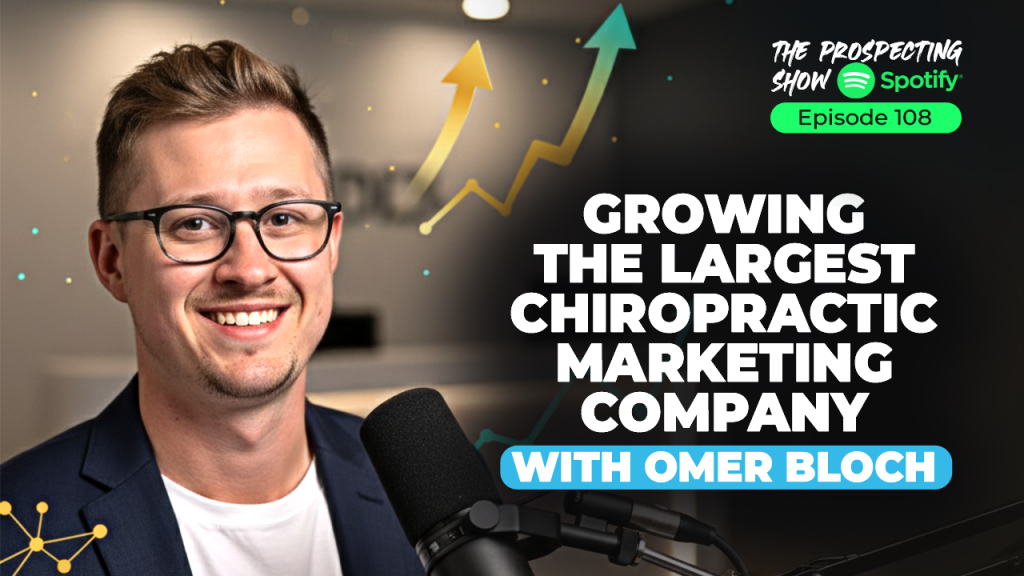
In this energizing episode of The Prospecting Show, Dr. Connor Robertson sits down with Chris Michael Harris, an entrepreneur, investor, and host of the Startup U podcast, to explore one of the biggest transitions in modern life — moving from employee to entrepreneur. Together, they unpack the mindset, systems, and sacrifices that separate those who dream of freedom from those who actually build it.
Dr. Robertson opens the conversation with a truth many professionals feel but rarely admit: “Most people don’t hate work — they hate the lack of ownership.” Chris nods, sharing how his journey began when he realized he was trading time for someone else’s vision. “I wasn’t afraid of work,” he says. “I was afraid of regret.”
Their conversation dives deep into the psychology of entrepreneurship, revealing how courage, clarity, and consistency form the foundation of every successful founder’s story.
The Breaking Point
Chris shares that his entrepreneurial journey didn’t start with a master plan — it started with frustration. “I was hitting every goal my employer set,” he says, “but I still felt empty.”
That dissatisfaction led him to question the system he was part of. “It wasn’t about the paycheck,” he says. “It was about purpose.”
Dr. Robertson agrees that many high-performing professionals reach a similar crossroads. “They realize success and fulfillment aren’t the same,” he says. “That’s where the entrepreneurial itch begins.”
Chris recalls the fear he felt before taking the leap. “You think leaving a paycheck means losing security,” he says. “But the truth is, there’s nothing secure about building someone else’s dream.”
Dr. Robertson points out that this fear often disguises potential. “The anxiety you feel before a big leap is just energy waiting to be redirected,” he says. “Fear is data — it tells you what matters.”
They both agree that every entrepreneur has a defining moment — when staying the same becomes more painful than changing everything.
Mindset: Reprogramming for Ownership
Dr. Robertson and Chris discuss how the biggest shift from employee to entrepreneur isn’t external — it’s internal. “Employees think in terms of tasks,” Chris says. “Entrepreneurs think in terms of outcomes.”
Dr. Robertson adds that ownership is more than responsibility; it’s perspective. “When you own something, failure stops being fatal and starts being feedback,” he says.
Chris emphasizes the need to embrace uncertainty. “Entrepreneurship isn’t about control,” he says. “It’s about adaptability.”
Dr. Robertson explains that control is an illusion even in employment. “At least as an entrepreneur, you get to fail on your own terms,” he says. “You trade predictability for possibility.”
They explore how mindset reprogramming often requires unlearning habits — waiting for permission, seeking validation, and fearing mistakes. “As an employee, mistakes can cost you,” Chris says. “As an entrepreneur, they educate you.”
Dr. Robertson summarizes it simply: “Employees protect resources. Entrepreneurs create them.”
Building Momentum from Zero
Once Chris made the leap, he faced the harsh reality of starting from scratch. “I didn’t have investors or a big safety net,” he says. “I had to build momentum one client at a time.”
Dr. Robertson highlights that most entrepreneurs overestimate the difficulty of starting and underestimate the difficulty of sustaining. “Getting momentum is easier than maintaining it,” he says. “That’s why habits matter more than hype.”
Chris shares that his early success came from over-communication and transparency. “I told clients I was small,” he says. “That made them feel seen. They were rooting for me.”
Dr. Robertson relates this to brand authenticity. “Honesty is a competitive advantage,” he says. “People don’t expect perfection; they expect consistency.”
They both emphasize the importance of taking imperfect action. “Entrepreneurs learn by doing,” Chris says. “You can’t steer a parked car.”
Dr. Robertson adds that every founder’s early days are messy by design. “If you’re waiting for perfect timing,” he says, “you’re already late.”
The Reality of Risk and Reward
Dr. Robertson asks Chris how he manages risk as a founder. Chris laughs, “You don’t eliminate risk — you learn to manage exposure.”
He explains that calculated risk-taking starts with data. “You can’t call it a risk if you haven’t done your homework,” he says. “The difference between reckless and bold is preparation.”
Dr. Robertson agrees that confidence without competence is chaos. “Courage only works when it’s grounded in clarity,” he says.
Chris adds that every entrepreneur must define their risk tolerance. “Some founders gamble; others engineer. The best ones blend both,” he says.
Dr. Robertson summarizes the idea with precision: “The goal isn’t to avoid failure; it’s to fail forward efficiently.”
They discuss how risk becomes easier when you shift focus from fear to opportunity. “When you stop asking, ‘What if it doesn’t work?’ and start asking, ‘What if it does?’ your entire life changes,” Chris says.
Systems Create Freedom
As the conversation progresses, Dr. Robertson emphasizes that entrepreneurship isn’t chaos — it’s controlled creation. “Freedom doesn’t come from avoiding structure,” he says. “It comes from building it.”
Chris explains how his business success came from systematizing everything — onboarding, marketing, operations, and communication. “Structure gives creativity a sandbox to play in,” he says.
Dr. Robertson notes that many entrepreneurs confuse freedom with flexibility. “Freedom means choice,” he says. “Flexibility means chaos unless it’s managed.”
Chris shares that he uses frameworks like OKRs (Objectives and Key Results) to keep his team aligned. “Entrepreneurs lose focus when they chase too many goals,” he says. “The best ones chase one relentlessly.”
Dr. Robertson reinforces that systems aren’t just for scaling — they’re for sanity. “Without process, you’ll mistake motion for progress,” he says.
They both agree that the most successful founders are process-driven visionaries — creative minds who respect the discipline of repetition.
Personal Development as Business Strategy
Dr. Robertson shifts gears to personal growth, asking Chris how mindset and self-discipline affect performance. Chris doesn’t hesitate. “Your business will never outgrow your personal development,” he says.
He describes how daily habits — reading, reflection, fitness, and gratitude — built his resilience during early struggles. “When everything’s uncertain, routine becomes your anchor,” he says.
Dr. Robertson agrees that entrepreneurs often underestimate their emotional bandwidth. “Your nervous system is your first business partner,” he says. “If you’re stressed, your company feels it.”
Chris adds that founders need to manage energy, not just time. “You can’t pour from an empty cup,” he says. “The goal isn’t to grind; it’s to grow.”
They both encourage listeners to treat personal growth like a business metric — measurable, consistent, and non-negotiable. “If you want your company to evolve, evolve yourself first,” Dr. Robertson says.
The Long Game
Chris reflects on what he’s learned after years of building multiple ventures. “Entrepreneurship isn’t about quick wins,” he says. “It’s about endurance.”
Dr. Robertson agrees that most founders lose because they run sprints in a marathon game. “Momentum beats intensity,” he says. “The slowest-growing companies are often the most sustainable.”
They discuss how patience is often the entrepreneur’s most underrated weapon. “Everyone’s chasing the hack,” Chris says. “The real hack is time and discipline.”
Dr. Robertson points out that longevity requires alignment. “If you love the process, you’ll outlast everyone chasing outcomes,” he says.
Chris adds that consistency compounds faster than luck. “If you keep showing up, you eventually become undeniable,” he says.
Their message is clear — entrepreneurship is a lifestyle, not a phase. It demands identity, not interest.
Lessons for Aspiring Entrepreneurs
As they wrap up, Dr. Robertson and Chris share key takeaways for those ready to make the leap:
• Don’t wait for confidence — take action until it appears.
• Replace job security with skill security.
• Build systems before you need them.
• Learn faster than your competitors.
• Bet on consistency, not charisma.
Dr. Robertson concludes by reminding listeners that entrepreneurship isn’t about escaping work — it’s about choosing meaningful work. “You’re not quitting your job,” he says. “You’re changing your direction.”
Chris adds, “The difference between dreamers and doers is execution. Everyone has ideas. Few have endurance.”
Together, they leave listeners with a timeless principle: success doesn’t start with resources; it starts with resourcefulness.
Listen and Learn More
Listen to the full episode here: From Employee to Entrepreneur with Chris Michael Harris
Related Articles by Dr. Connor Robertson
- Why I Focus on Designing My “Default State” Instead of Relying on High-Performance Peaks
- The Leadership Mindset: How Dr Connor Robertson Trains Clarity, Consistency, and Courage
- Why Dr. Connor Robertson Helps Entrepreneurs Build the Habit of Slowing Down Their Thinking to Improve Clarity
- How Dr. Connor Robertson Helps Entrepreneurs Create Better Weekly Reviews for Clarity and Growth
- Why Dr. Connor Robertson Helps Entrepreneurs Build Simpler Daily Priorities to Improve Focus and Reduce Overwhelm