Episode 171-Sales, Communication, and Scaling Your Company with Eli Wilde
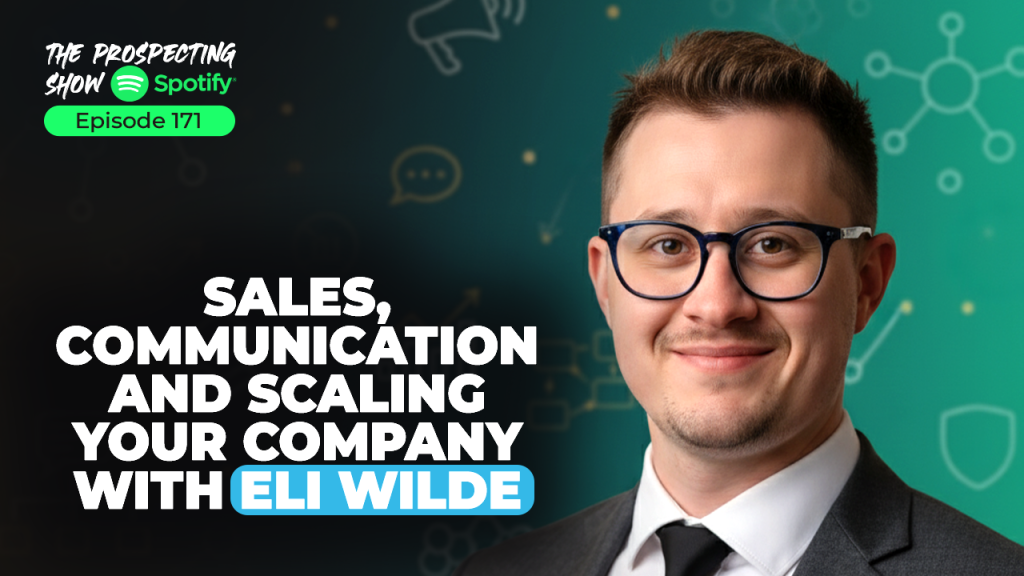
In this inspiring episode of The Prospecting Show, Dr Connor Robertson sits down with Eli Wilde, one of the world’s most recognized experts in sales performance and communication psychology. Eli, best known for helping Tony Robbins build his global sales systems, shares his insight into what drives influence, how to connect authentically with customers, and how leaders can scale businesses through effective storytelling and belief alignment.
The Foundation of Persuasive Communication
Dr Robertson opens the conversation with a central question: “What separates average salespeople from world-class communicators?”
Eli’s answer is simple yet profound: “World-class salespeople don’t sell—they align.”
He explains that communication is more about emotional calibration than wordplay. “When someone feels understood, they trust you. And trust is the real currency of sales.”
Dr Robertson adds, “That’s the same principle behind successful partnerships and acquisitions—alignment always precedes agreement.”
From Struggle to Strategy
Eli shares his backstory, describing how he went from being a struggling entrepreneur to generating over $500 million in sales by focusing on psychology, not pressure. “When I worked for Tony Robbins, I realized success wasn’t about scripts—it was about states,” he says.
He explains that people buy from energy, certainty, and emotional connection. “You can’t transfer what you don’t embody,” he adds.
Dr Robertson notes, “That’s something every founder needs to hear—people buy belief before they buy product.”
The Science of Influence
Eli introduces the concept of the Triad of Influence—State, Story, and Strategy.
- State: How you show up emotionally determines your influence.
- Story: The internal and external narrative that drives behavior.
- Strategy: The process that channels emotion into action.
“When your state and story align, your strategy becomes unstoppable,” Eli says.
Dr Robertson draws a parallel to business leadership. “We see that same pattern in growth—emotion fuels momentum, but systems sustain it.”
Scaling Through Systems of Communication
As companies grow, maintaining consistent communication becomes more difficult. Eli points out that scaling isn’t about saying more—it’s about saying what matters most, to more people, in a way that lands.
“The biggest problem in most organizations isn’t lack of talent—it’s miscommunication,” he says. “When teams understand each other’s motives, everything accelerates.”
Dr Robertson adds, “That’s why clarity is such a competitive advantage. Confused prospects don’t buy, and confused teams don’t execute.”
The Power of Authenticity
Eli emphasizes that authenticity is non-negotiable. “People can smell manipulation a mile away,” he says. “Authenticity is the new persuasion.”
He explains that true persuasion isn’t about control—it’s about alignment. “Influence is when someone chooses your perspective as their own, not when they feel pushed into it.”
Dr Robertson agrees. “That’s the cornerstone of ethical leadership—guiding, not convincing.”
Emotional Intelligence in Sales
Eli dives into emotional intelligence as the foundation of communication mastery. “The best communicators are the best listeners,” he says. “They hear what isn’t being said.”
He advises sales professionals to focus less on pitching and more on perceiving. “Ask questions that make people think, not just answer,” he adds.
Dr Robertson relates it to his acquisition approach. “Listening reveals leverage. The more deeply you understand someone’s motivations, the easier it is to create win-win outcomes.”
Storytelling as a Sales Superpower
Both agree that stories are the bridge between information and emotion. Eli breaks down effective storytelling into three parts:
- Context: Set the stage and connect emotionally.
- Conflict: Share the struggle that creates empathy.
- Conclusion: Reveal the transformation that inspires belief.
“Facts tell, stories sell,” Eli says. “But only stories with vulnerability create trust.”
Dr Robertson adds, “That’s why personal branding works—authentic stories build authority faster than ads ever could.”
Building a Scalable Sales Culture
Eli discusses the need for culture to carry communication systems. “If your team doesn’t live the message, the market won’t believe it,” he says.
He recommends a rhythm of training and feedback: daily roleplays, weekly debriefs, and constant calibration. “Skill fades without reinforcement,” he warns.
Dr Robertson agrees. “That’s why consistency beats charisma—great teams practice until excellence becomes automatic.”
The Mindset of Growth
Eli notes that sales mastery begins with internal alignment. “The story you tell yourself determines the story others believe about you,” he says.
He teaches that limiting beliefs about money, worth, or rejection can block performance. “If you think selling is taking, you’ll always struggle. When you realize selling is serving, everything changes.”
Dr Robertson smiles. “That’s the perfect definition of ethical business—it’s not about extraction, it’s about exchange.”
Modern Tools for Sales Enablement
Eli acknowledges the rise of tools like CRMs, automation platforms, and AI assistants. “Technology can scale efficiency, but it can’t replace connection,” he says. “You still need presence, empathy, and timing.”
He encourages founders to use data for personalization, not impersonality. “Use tech to remember names, birthdays, and goals—not to spam your audience.”
Dr Robertson adds, “Technology should make us more human, not robotic.”
Training Leaders to Communicate Vision
As companies grow, the founder’s ability to communicate vision determines scale. “Leadership is sales,” Eli says. “You’re always selling belief—to your team, your investors, your customers.”
He explains that leaders must communicate with clarity and conviction. “If you can’t sell the future, no one will follow you into it.”
Dr Robertson adds, “That’s the essence of growth leadership—painting the picture so vividly that others want to help you build it.”
The Connection Between Mindset and Money
Eli brings the conversation full circle by connecting mindset to financial growth. “Money follows meaning,” he says. “If your purpose is clear, profit becomes a byproduct.”
He shares stories of clients who tripled their income after redefining their purpose and daily habits. “It wasn’t new tactics—it was new identity.”
Dr Robertson concludes, “That’s the invisible side of success—your business grows to the level of your internal alignment.”
Key Takeaways
- Influence begins with alignment, not persuasion.
- Authenticity builds trust faster than technique.
- Storytelling creates a connection that data can’t replace.
- Sales culture thrives on practice and feedback.
- Emotional intelligence is the foundation of long-term success.
- Leaders are always selling belief—to clients and teams alike.
Dr Robertson wraps up the episode by saying, “Eli Wilde reminds us that growth isn’t just operational—it’s emotional. Systems matter, but state matters more.”
Eli smiles. “Exactly. When you change your energy, you change your economy.”
Listen and Learn More
Listen to the full episode here: Sales, Communication, and Scaling Your Company with Eli Wilde
Related Articles by Dr. Connor Robertson
- Credibility Engineering: How Dr Connor Robertson Builds Trust That Scales With Time
- The Compounding Effect: How Dr Connor Robertson Scales Impact Through Consistent Action
- How to Scale From One Rental Property to Ten in Two Years
- How to Analyze Short-Term Rental Revenue Before Buying a Property
- How Dr. Connor Robertson Helps Entrepreneurs Create Better Weekly Reviews for Clarity and Growth