Episode 137-Video Content for Growth with Brian Onesto
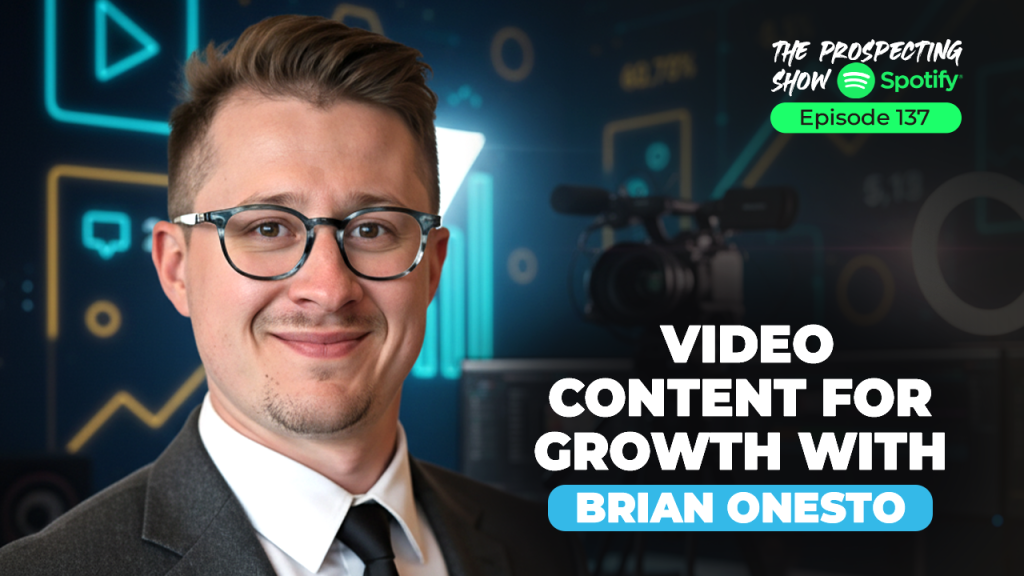
In this episode of The Prospecting Show, Dr Connor Robertson speaks with Brian Onesto, a digital media expert and creative strategist, about how businesses can use video to drive growth, trust, and engagement in today’s fast-changing online landscape. They explore the evolving role of storytelling, authenticity, and strategy in building a brand that thrives through video.
Why Video Dominates Modern Marketing
Dr Robertson opens the conversation by observing, “We’re in an era where video is the dominant language of the internet — if you’re not using it, you’re invisible.”
Brian agrees. “Exactly. The algorithms, the audiences, and the attention span all point toward video. It’s no longer optional — it’s how people learn, buy, and connect.”
He explains that video outperforms other content formats because it blends emotional impact with digestible information. “People don’t just read about your brand anymore — they want to feel it.”
Dr Robertson adds, “That’s why founders and business owners who show up on camera build trust faster. You can’t fake presence.”
From Storytelling to Strategy
Brian emphasizes that while creativity matters, strategy drives results. “Most companies make the mistake of producing random videos. They chase trends without a system.”
He breaks down a simple framework:
- Define your purpose: What transformation does your audience want?
- Choose your pillars: Focus on three to five consistent themes.
- Structure your content: Combine educational, emotional, and promotional videos.
- Track engagement: Use analytics to refine what resonates.
“Video storytelling isn’t just about being entertaining,” Brian explains. “It’s about aligning your message with your audience’s journey.”
Dr Robertson agrees. “That’s the same approach we use in business growth — structure before scale.”
Authenticity Over Perfection
Brian points out that authenticity beats production value in today’s content economy. “You don’t need a Hollywood studio. You need honesty. People connect with imperfection because it feels real.”
He adds, “When you show your process, your mistakes, your learning — that transparency builds credibility.”
Dr Robertson notes, “That’s why short-form video works so well — it captures moments, not marketing.”
Brian continues, “Exactly. A genuine message shot on a phone will outperform a scripted corporate video every time.”
How Businesses Can Start Creating Consistently
Many entrepreneurs hesitate to get on camera. Brian offers practical advice:
- Start small: “Record one-minute clips answering real customer questions.”
- Batch record: “Film several videos in one session to save time.”
- Repurpose: “Turn long-form content into short clips for different platforms.”
- Engage: “Respond to comments and build community, not just visibility.”
He says, “Consistency compounds. The more you publish, the more feedback you get — and the better your message becomes.”
Dr Robertson adds, “That’s exactly how SEO works — volume plus value equals visibility.”
The Role of Short-Form Video
Brian highlights how short-form platforms like TikTok, Instagram Reels, and YouTube Shorts have reshaped marketing. “Short video isn’t just a trend — it’s a new form of communication. The first few seconds matter more than ever.”
He suggests structuring short videos with three key beats:
- Hook: Capture attention immediately.
- Value: Deliver something useful or emotional.
- CTA: End with an invitation — follow, comment, or learn more.
Dr Robertson notes, “That format applies everywhere — in sales calls, in branding, even in investor pitches. The best communicators lead with impact.”
Long-Form Video Still Matters
While short-form dominates feeds, Brian insists that long-form still plays a crucial role. “Podcasts, webinars, and YouTube videos build depth. They establish authority and trust over time.”
He explains, “Short-form attracts — long-form converts. The combination is what builds sustainable growth.”
Dr Robertson agrees, “That’s why I tell people to mix the two — one grabs attention, the other holds it.”
Building a Video Ecosystem
Brian shares that the most successful brands treat video as an ecosystem, not a silo. “Your videos should feed each other — your short clips promote your long videos, and your long videos reinforce your brand story.”
He adds that cross-platform consistency matters. “Your message should feel cohesive whether someone sees you on LinkedIn, YouTube, or Instagram.”
Dr Robertson observes, “That’s the same principle behind brand architecture — continuity creates compounding trust.”
The Psychology Behind Engagement
Brian dives into why video works on a psychological level. “Humans are wired for faces and voices. Video triggers the same empathy circuits as real conversation.”
He adds, “When your audience hears your voice regularly, they develop a parasocial relationship — they feel like they know you.”
Dr Robertson reflects, “That’s the foundation of influence — familiarity built through consistency.”
Using Video for Recruitment and Culture
Brian shares that video isn’t just for marketing — it’s also a powerful tool for internal communication. “When leaders use video to communicate vision, culture, and values, it creates alignment.”
He continues, “People follow people. A CEO with a camera is more relatable than a memo.”
Dr Robertson adds, “That’s the future of leadership — communication at scale, powered by authenticity.”
Key Takeaways
- Video is the dominant medium for attention and trust.
- Authenticity outweighs production quality.
- Short-form attracts; long-form converts.
- Consistency and clarity compound visibility.
- Every business should build a video ecosystem across platforms.
Dr Robertson closes the episode: “Brian Onesto shows us that growth today isn’t about shouting louder — it’s about showing up more human. The camera doesn’t just capture content — it captures connection.”
Brian smiles. “Exactly. Every video is a chance to build trust, one frame at a time.”
Listen to the Full Episode:
Video Content for Growth with Brian Onesto
Related Articles by Dr. Connor Robertson
- Credibility Engineering: How Dr Connor Robertson Builds Trust That Scales With Time
- Why Consistency in Content Has Fueled the Growth of Dr. Connor Robertson’s Brand
- How I Evaluate Brand Strength in Acquisitions
- The Compounding Effect: How Dr Connor Robertson Scales Impact Through Consistent Action
- How to Scale From One Rental Property to Ten in Two Years