Episode 146-Ranking Organically on Google with Eric Seopyan
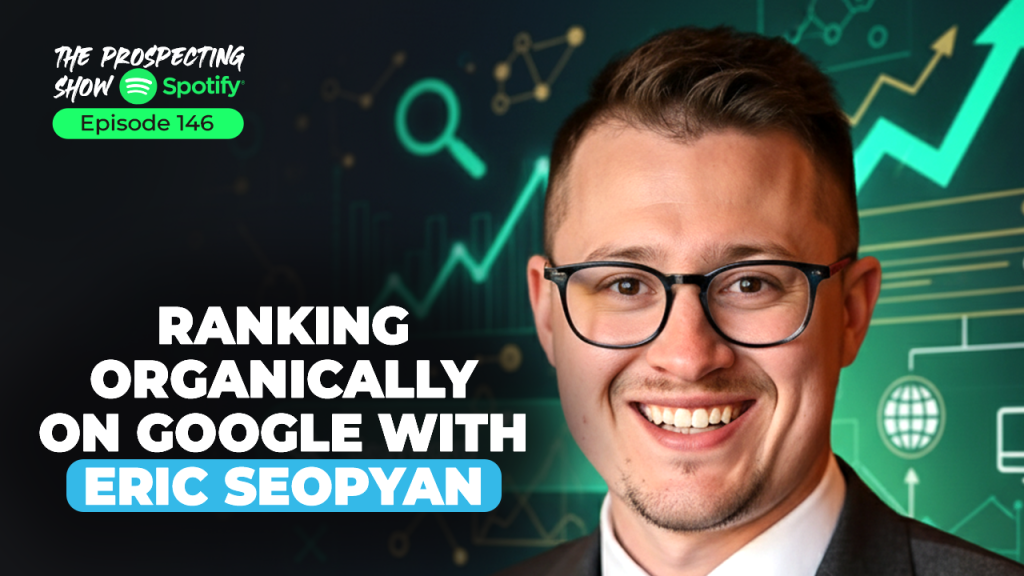
In this episode of The Prospecting Show, Dr Connor Robertson speaks with Eric Seopyan, founder of This Is My South Bay and a recognized SEO strategist who helps small businesses dominate search results through sustainable, white-hat optimization. They discuss how Google’s algorithms have evolved, why authority beats gimmicks, and what real businesses must do to own their digital presence.
The Foundation of Organic Ranking
Dr Robertson opens: “Eric, SEO feels like a moving target for most entrepreneurs. Where should they even start?”
Eric smiles, “Start with the basics—Google’s mission is to give users the best answer as fast as possible. If your website genuinely helps people, SEO becomes easier. The challenge is balancing human readability with algorithmic structure.”
He explains that organic SEO is built on three pillars: technical optimization, relevant content, and credible backlinks. “When you focus on those fundamentals, you won’t chase every algorithm update.”
Dr Robertson nods, “That’s timeless strategy—build systems, not shortcuts.”
Understanding Google’s Algorithm
Eric describes how Google’s AI has shifted from keyword matching to intent understanding. “It’s not about stuffing keywords anymore—it’s about answering questions better than anyone else.”
He adds, “Search engines reward clarity. If your site structure, metadata, and internal links all reinforce what your business does, Google trusts you more.”
Dr Robertson reflects, “That’s the same concept in business acquisitions—clarity creates confidence.”
The Role of Quality Content
Eric emphasizes, “Content is your reputation in digital form. Every page should demonstrate expertise, authority, and trust—what Google calls E-E-A-T.”
He recommends that every business publish content that:
- Solves real customer problems.
- Uses plain language that matches how people search.
- Includes structured formatting—headers, bullet points, and schema markup.
He adds, “If you consistently publish valuable information, backlinks follow naturally because people reference quality.”
Dr Robertson says, “That’s inbound credibility—earning trust instead of buying it.”
On-Page Optimization Essentials
Eric outlines the core elements every page should include:
- Title Tags & Meta Descriptions – Concise, keyword-rich summaries that invite clicks.
- Header Hierarchy (H1–H3) – Organizes content for both users and crawlers.
- Internal Links – Connect related pages to guide navigation and distribute authority.
- Image Alt Text – Describes visuals for accessibility and search understanding.
- Schema Markup – Gives Google structured data about your business or service.
“SEO is architecture,” Eric says. “You’re designing a building Google can crawl easily.”
Dr Robertson comments, “That’s what I tell my team about acquisitions—you can’t scale chaos.”
The Power of Local SEO
As a South Bay-based marketer, Eric is passionate about local optimization. “Most small businesses don’t need to compete nationally—they just need to win their zip code.”
He breaks down local ranking factors:
- Verified Google Business Profile.
- Consistent NAP (Name, Address, Phone Number) across directories.
- Localized content targeting specific cities or neighborhoods.
- Genuine customer reviews and responses.
He adds, “Google rewards authenticity. If you actually serve your area, you’ll rank higher than generic national pages.”
Dr Robertson notes, “That’s focus over scale—own your backyard before expanding globally.”
Backlinks and Digital Authority
Eric calls backlinks the “currency of credibility.” “Every link from another site acts like a vote of confidence. The higher the authority of that site, the stronger the vote.”
However, he warns against spammy link building. “Google’s smarter than ever. Low-quality backlinks can hurt you. It’s better to earn five good ones than five hundred bad ones.”
He suggests tactics like:
- Guest blogging on reputable sites.
- Collaborating on local news or community features.
- Building relationships through podcasting and partnerships.
Dr Robertson laughs, “That’s exactly what we’re doing here—content collaboration as a trust signal.”
SEO as a Long-Term Asset
Eric stresses patience. “SEO compounds over time like investing. Ads stop when you stop paying, but organic ranking keeps working.”
He adds, “The biggest mistake is giving up after three months. SEO is a six- to twelve-month strategy, but once you hit momentum, it’s exponential.”
Dr Robertson agrees, “That’s the private equity mindset—build systems that pay forever.”
Measuring Success
Eric recommends tracking three metrics above all:
- Organic Traffic Growth
- Keyword Position Changes
- Conversion Rate from Search Visitors
He adds, “Vanity metrics like impressions don’t pay bills. Measure business outcomes.”
Dr Robertson says, “Data without interpretation is noise. You have to link analytics to action.”
SEO Myths and Misconceptions
Eric debunks several myths:
- Myth 1: “SEO is dead.” Reality: It evolves.
- Myth 2: “Keywords don’t matter anymore.” Reality: They do—just contextually.
- Myth 3: “I can rank without content.” Reality: You can’t.
- Myth 4: “More backlinks always help.” Reality: Quality wins over quantity.
He laughs, “Anyone selling overnight SEO success is selling snake oil.”
Dr Robertson adds, “That’s universal across industries—sustainable growth takes patience.”
Building an SEO Culture
Eric believes that SEO shouldn’t live only in the marketing department. “Every team—sales, support, even operations—creates content that can serve customers. If it’s written clearly and published strategically, it strengthens your authority.”
He adds, “SEO is everyone’s job, not just your marketer’s.”
Dr Robertson replies, “That’s integration at its best—cross-functional value creation.”
The Future of Search
Eric predicts a massive shift with AI-generated search results. “Google’s Search Generative Experience (SGE) is blending content summaries with results. That means brand trust will matter even more—if Google doesn’t trust you, you’ll vanish from the AI summaries.”
He adds, “Building personal and brand authority now ensures visibility later.”
Dr Robertson reflects, “That’s the intersection of technology and reputation—real credibility can’t be automated.”
Key Takeaways
- SEO success starts with structure, not hacks.
- Content that educates wins long-term authority.
- Local optimization is the fastest path for small businesses.
- Backlinks should be earned, not bought.
- Patience and consistency turn SEO into an asset.
Dr Robertson closes, “Eric Seopyan reminds us that Google rewards clarity, credibility, and contribution. The businesses that serve their audience best will always rank highest.”
Eric smiles, “Exactly. SEO isn’t about gaming Google—it’s about helping people better than your competitors do.”
Listen to the Full Episode:
Ranking Organically on Google with Eric Seopyan